
Why Modern Bread is Fake


Bread - it’s the stuff of life, right? Or at least it used to be. Nowadays it is the stuff of sickness and diabetes. But why is that? What changed? Well, to figure it out we must dive into the past to see how our ancestors made bread and where we went wrong.
Part 1 - The Grain
The original grain of wheat is not what we eat today. The original wheat kernel was called Einkorn. This was a wheat berry that is much smaller than the modern wheat of today. Modern wheat is Hard Red Wheat.
The first known use of einkorn wheat is from 9000B.C. It was discovered that in 8000 B.C. in Çatalhöyük, Turkey, einkorn husks were stuck to a rock that they likely used to cook the grain on. Einkorn was even discovered in the stomach of Ötzi the Iceman, who was alive in 3350 B.C. Einkorn is a very ancient grain. Modern wheat first developed from Turkey red wheat in the 1870s, and was selectively bred until it became what we have today.
Besides the size difference of grains, einkorn also has less gluten. Einkorn contains much more nutrition than modern wheat. It contains less starch than modern wheat and more protein, as well as packing more vitamins and minerals than modern wheat.
Part 2 - The Fermentation
One of the essential aspects of bread-making is fermenting, letting the loaf rise as it is referred to. What happens during fermentation is that the yeast digests the starches in the bread, creating CO2 gas bubbles that expand the loaf and cause it to rise. But, more importantly it also unlocks nutrients from the bread that would otherwise be locked away.
Fermentation reduces levels of phytic acid - an antinutrient that blocks the absorption of certain minerals. Long fermentation times can increase the amount of B-vitamins in the bread.
Part 3 - The Process


Modern wheat is harvested using machines, not picked by hand. It is dried quickly using modern techniques instead of drying in the sun. It is milled immediately into flour using steel mills, not stones. The steel mills produce a lot of heat during milling unlike stone mills. The heat produced during milling causes the flour to go rancid quicker. After milling, it is passed through a fine sieve to remove the wheat bran and wheat germ, leaving only the endosperm which is mostly starch. Then this flour which has already been stripped of most of its nutrients is bleached to get the color to be white. After the flour has been bleached it is enriched by adding in synthetic vitamins and nutrients.
Our ancestors did not have the option to go to the grocery store and just buy a packet of bread yeast. They had to make it themselves. One option for them was sourdough, but another and more preferred option was ale barm, the liquid yeast that rises to the top when fermenting ale. Bakers and brewers were closely linked. People from the past noted that the ale barm produced a bread that was lighter than when using sourdough.
These kinds of yeast, ale barm and sourdough, contain many more strains of yeast and bacteria that can develop many more flavors in the final loaf compared to modern bread yeast. Modern yeast that is sold today is only one strain of yeast. The multiplicity of yeast and bacteria that is contained in barm and sourdough creates both a pre-biotic and pro-biotic effect that makes the bread much healthier for your gut.


The bread of yesteryear was authentic. It was the real deal. The wheat berries would be picked by hand, Wheat separated from the chaff, then dried for long-term storage. When bread was to be made, the berries would be taken and ground into flour using large stones to mill the grain into flour.
So after the grain was milled into flour and the yeast was selected and ready, it was time to make the bread. Basic bread is very simple; only four ingredients: flour, water, yeast, and salt. Flour was combined into a bowl with the salt and the yeast. Then enough water was added to get the mixture to come together to form a dough. The bread was then hand-kneaded to develop the gluten content, making it such that the bread dough could hold more air bubbles during fermentation to get a better rise. After kneading the bread they would let it ferment for several hours at least, but more often overnight.
After the fermentation was completed, Earthen ovens had to be fired up, preheated by putting a flame inside them to heat the walls of the oven. After this, the fire was removed from the oven and the bread dough was inserted. The hot air inside the oven would act just as a modern oven, except they did not have precise temperature control like modern ovens. The bread would be baked inside the earthen oven, not based on any timers, but based on when you could smell the loaf. That’s how they knew when the bread was done.


Now compare that to modern bread. You simply walk in the grocery store and pick up a loaf of bread that’s wrapped in plastic. We no longer have to do any of the work required for making bread, because that work is done on an industrial scale.


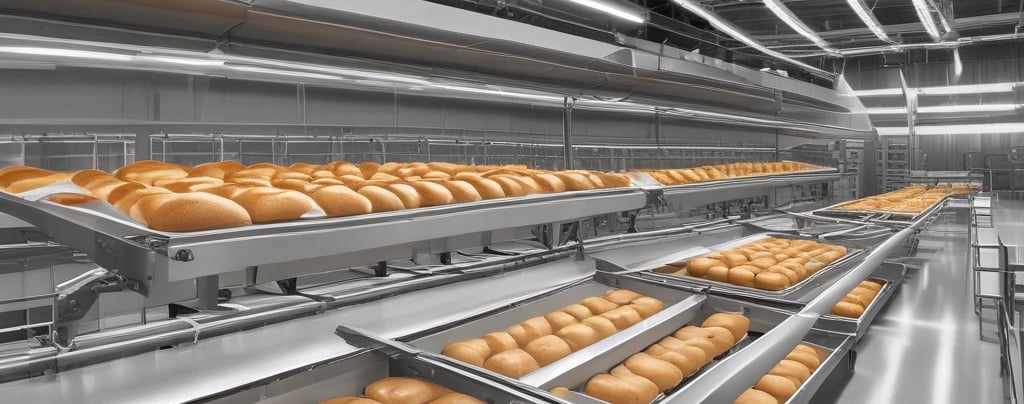
After the flour has been bleached and formed into a dough, dough conditioners are added to it to make the gluten develop faster. It is then kneaded by spiral machine mixers for a shorter amount of time than would be required if kneading was done by hand, because of the dough conditioners that were added. After this, the bread is “proofed”, essentially fermentation but much, much shorter. Commercial bread yeast is what ferments the loaf, only one strain of yeast. Instead of letting the dough rise for hours upon hours, modern dough made in factories are proofed for just one hour.
After this short amount of time proofing the dough, it is put into an industrial oven, first steaming the loaf then baking it. After it is baked, the bread goes into plastic bags and the steam is trapped inside it, causing the crust to soften. It is then shipped to grocery stores where it sits on the shelves for multiple days before someone picks it up to buy it. Modern bread is much more a science experiment than an art form.


Part 4 - What can be done?
So all the bread today is not what bread used to be. But what can be done about it? Hand picking grains and milling them with stones is just not practical in the modern day.
Well, the good news is that you don’t have to pick the grain by hand and you don’t have to mill it with stones. You can buy stone ground einkorn flour online (like from Jovial Farms) and make bread from that. And the best thing that I’ve neglected to mention until now is that not only will this bread be healthier, but it will also taste significantly better than bread made from regular flour. For yeast you can still use store-bought yeast and it'll get the job done, but if you do want to make your own sourdough starter, that will produce a healthier and tastier result.
If you do want to grind your own grain for the freshest flour, you could pick up something like the KitchenAid Grain Mill attachment which uses steel milling, or some type of hand-powered stone mill. For any steel grain mill, it is best to grind in short bursts of about 10 seconds or less, then give the mill some time to cool down, that way less nutrients in the grain will be lost to the heat of the mill.
Making bread is simple. So simple in fact, that in the past they often didn’t even bother to write down recipes for it. All that is needed is flour, water, yeast, and salt. Check out my recipe to learn how to make your own loaf of einkorn bread that will be both healthy and delicious.